Warehousing is no longer just about stacking goods and maximizing floor space. It has evolved into a highly strategic part of supply chain management where speed, accuracy, and efficiency determine competitiveness. As global commerce expands and customer expectations for fast delivery increase, traditional storage methods are struggling to keep up. 自動化倉儲 This is where smart and automated racking systems are shaping the future of warehouse storage.
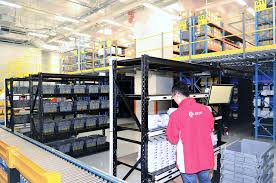
Modern warehouses are becoming interconnected environments where data, machines, and storage structures work together seamlessly. Instead of relying solely on manual labor and static shelving, businesses are adopting intelligent systems that can adapt, respond, and optimize storage in real time. This transformation is not just a trend but a fundamental shift in how warehouses operate.
What makes a Racking System “Smart”
A smart racking system integrates advanced technologies such as sensors, automation software, robotics, and real-time data tracking. Unlike conventional racks, these systems are capable of communicating with warehouse management systems to provide continuous updates on inventory levels, storage locations, and movement patterns.
Sensors embedded within the racks can detect weight distribution, stock levels, and even potential structural risks. This information is sent to a centralized system that analyzes and optimizes storage decisions automatically. As a result, warehouse managers gain a complete overview of operations without needing to physically inspect every section of the facility.
Smart racking also enhances accuracy. By reducing human involvement in repetitive tasks, it minimizes errors such as misplaced inventory or incorrect stock counts. This level of precision is essential in industries where even small mistakes can lead to significant financial losses.
The Role of Automation in Modern Storage Systems
Automation is at the core of next-generation warehouse storage. Automated racking systems often work alongside robotic retrieval systems, conveyor belts, and automated guided vehicles. These technologies collaborate to move, store, and retrieve goods with minimal human intervention.
In a fully automated environment, when an order is received, the system identifies the required item, locates its exact position within the rack, and triggers a robotic mechanism to retrieve it. This process happens within seconds, significantly reducing order processing time.
Automation also improves workplace safety. By reducing the need for manual handling of heavy or hazardous items, it lowers the risk of accidents and injuries. Employees can then focus on higher-value tasks such as system monitoring, maintenance, and quality control.
Data-Driven Storage Optimization
One of the most powerful aspects of smart racking systems is their ability to use data for continuous optimization. Every movement within the warehouse generates valuable information. Over time, this data reveals patterns such as which products are frequently accessed, which items remain in storage longer, and how space is being utilized.
Using predictive analytics, smart systems can reorganize storage layouts automatically to improve efficiency. Fast-moving goods can be placed in more accessible locations, while slow-moving inventory can be stored in higher-density zones. This dynamic approach ensures that warehouse space is always used in the most effective way possible.
Data integration also allows businesses to forecast demand more accurately. By analyzing historical trends, companies can adjust storage strategies ahead of time, reducing delays and improving supply chain responsiveness.
Robotics and the Rise of Autonomous Warehouses
Robotics is playing a major role in shaping the future of warehouse storage. Autonomous robots are increasingly being used to handle tasks such as picking, sorting, and transporting goods within racking systems. These machines are designed to navigate complex warehouse environments with precision and efficiency.
In advanced setups, robotic systems can work 24/7 without fatigue, significantly increasing productivity. They can also operate in environments that may be difficult or unsafe for human workers, such as cold storage facilities or high-density storage zones.
When combined with smart racking, robotics creates a highly synchronized ecosystem where storage and retrieval are fully automated. This level of integration represents a major step toward fully autonomous warehouses.
Enhancing Space Efficiency Through Smart Design
One of the biggest challenges in warehousing is maximizing storage capacity without expanding physical space. Smart racking systems address this issue through innovative design and vertical optimization.
Automated systems can safely utilize higher storage levels that would be difficult for manual operations to reach. Additionally, dynamic storage allocation ensures that every available space is used efficiently based on real-time demand.
Some advanced systems even feature movable racks that can reconfigure themselves based on storage needs. This flexibility allows warehouses to adapt quickly to changing inventory levels or seasonal fluctuations.
Sustainability and Energy Efficiency in Smart Warehousing
Sustainability is becoming an increasingly important factor in warehouse design. Smart and automated racking systems contribute to energy efficiency by reducing unnecessary movement, optimizing lighting usage, and minimizing waste.
For example, automated systems can ensure that only active zones of a warehouse are illuminated or climate-controlled. This reduces energy consumption significantly compared to traditional warehouse operations.
Additionally, efficient space utilization means fewer resources are required to expand physical infrastructure, contributing to more sustainable business practices. Many companies are now adopting smart storage technologies as part of their environmental responsibility goals.
Challenges in Adopting Automated Racking Systems
Despite their advantages, smart and automated racking systems also present certain challenges. The initial investment cost can be high, making it difficult for smaller businesses to adopt these technologies immediately. Integration with existing warehouse infrastructure may also require significant upgrades.
Another challenge is system complexity. Employees must be trained to operate and maintain advanced technologies, which can take time and resources. Additionally, reliance on automation means that technical failures or software issues can temporarily disrupt operations.
However, as technology continues to advance, these challenges are gradually being reduced through more user-friendly systems and improved affordability.
The future Outlook of Warehouse Storage Technology
The future of warehouse storage is moving toward fully connected, intelligent ecosystems where automation, artificial intelligence, and robotics work together seamlessly. Smart racking systems will continue to evolve, becoming more adaptive, self-regulating, and efficient.
In the coming years, we can expect warehouses to become even more autonomous, with minimal human intervention required for day-to-day operations. Artificial intelligence will play a greater role in decision-making, while robotics will handle increasingly complex tasks.
Businesses that adopt these technologies early will likely gain a significant competitive advantage through faster operations, lower costs, and improved accuracy.
Conclusion
The transformation of warehouse storage through smart and automated racking systems marks a major milestone in logistics and supply chain evolution. These systems are not only improving efficiency but also redefining how warehouses function at a fundamental level.
By combining automation, data analytics, robotics, and intelligent design, the future of warehousing is becoming faster, safer, and more efficient than ever before. While challenges remain, the direction is clear—warehouses are steadily moving toward a fully automated and intelligent future where storage is no longer passive but actively optimized in real time.